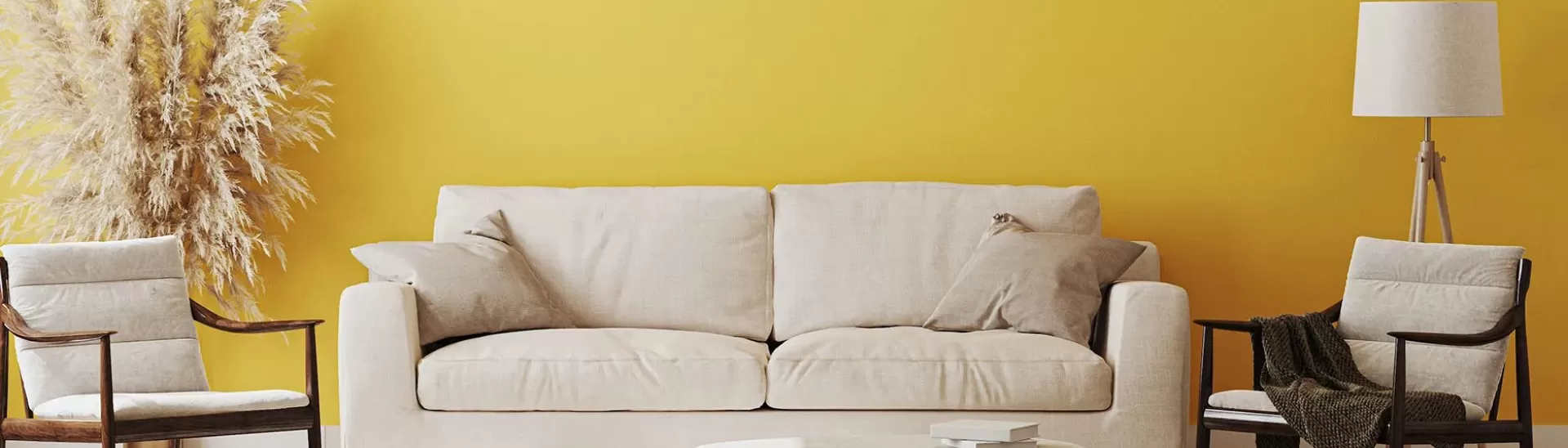
Yellow has a way of lifting up a space without demanding too much attention. It has a characteristic of lightening, warming, and introducing a sense of energy that feels easy to live with. Enter a room that has the right yellow, and it often feels brighter, more welcoming and easier to settle into. From living rooms to kitchens and even balconies, yellow works when you want energy radiating everywhere.
When you know how to make yellow colour, you move beyond the ready-made options and shape the tone to suit your space. Even though yellow is a primary colour, small adjustments can shift it towards softer pastels or deeper, richer tones. Thus, you get control over how it interacts with light, furniture and surrounding colours. Whether you are creating a subtle background or a more expressive wall, knowing how to work with yellow makes the outcome feel more planned. If you’ve ever felt indecisive over yellow shades, trying to find that exact tone that exists between soft sunlight and a richer golden flow, this guide will come in handy.
Yellow Colour Composition
Since it is a primary colour, its simplicity is what gives it strength. When you keep changing it with white, orange colour, or small amounts of other hues, you can create a lot of tones. Soft pastels or deeper shades of yellow cater to the requirements of your home with ease.
What Colours Make yellow?
This colour cannot be created by direct mixing. This is due to the fact that it is one of the foundational shades in colour theory. Instead, you can manage its appearance by mixing it with other colours. Add white colour to get softer yellows that feel airy and subtle.
A small quantity of green can shift yellow toward a slightly cooler direction. On the other hand, tiny hints of brown or grey colour help mute the brightness. This, in turn, will make the shade feel more grounded and easy to pair.
How to make yellow Colour?
This process is entirely based on refining and adjusting the colour instead of creating it from scratch. Mentioned here is the step-by-step process:
1. Have a yellow base
Pick a quality yellow paint as a base is your starting point. In this way, brightness and clarity are kept intact.
2. Lighten the colour
Softer, pastel yellows are possible to achieve when small amounts of white are added to it gradually.
3. Warm the shade
You can introduce a touch of orange to bring in warmth and create a richer, golden yellow.
4. Adjust the tone
A hint of green colour or blue can be added if you want a slightly cooler yellow. However, be mindful of these additions so that the colour does not become dull.
5. Test before final use
Ultimately, apply a small patch and test it under different lighting conditions before you actually commit to the full wall. Through these small and controlled adjustments, yellow becomes easier to refine. The aim is to move towards the exact tone that satisfies the requirements of your space.
Also Read: Best Colour Combination with Yellow for Interiors
What two colours make the yellow Colour?
But how do you make yellow colour? The answer is found in two colour combinations that can bring about yellow-like tones or improve their appearance. Let's explore some of them:
|
Colour Combination
|
Yellow Tone Achieved
|
|
White + trace orange
|
Warm yellow with a soft, glowing feel.
|
|
White + trace green-yellow
|
Pale lemon yellow with a fresh, light tone.
|
|
White + yellow ochre
|
Muted, antique yellow with an earthy depth.
|
|
Yellow + small amount of orange
|
Rich, golden yellow with added warmth.
|
How to Make Yellow Colour by Mixing Two Colours
Yellow rarely stays the same once you begin to work with it. While pure yellow in itself is not mixed, learning how to make yellow colour by mixing two colours helps you create a range of usable shades. The only points you need to keep in mind with each variation are careful blending and proportion. After you understand the ratios well, yellow becomes much easier to grasp and adapt.
|
Ratio (Approximately)
|
Dominant Colour Influence
|
Resulting Yellow Tone
|
|
90:5:5 (Yellow:White:Green)
|
Slight green influence
|
Crisp, fresh lemon yellow with a cool edge.
|
|
85:15 (White: Yellow)
|
White dominant
|
Soft, warm pastel yellow with a calming feel.
|
|
90:10 (Yellow: Orange)
|
Orange influence
|
Bright, vivid sunflower yellow with warmth.
|
|
75:15:10 (Yellow:Brown:Orange)
|
Brown undertone
|
Deep, earthy mustard yellow with richness.
|
|
70:25:5 (Yellow:Orange:Brown)
|
Orange dominant
|
Rich golden yellow with depth and warmth.
|
|
65:30:5 (Yellow:Orange:Red)
|
Orange-red influence
|
Vibrant marigold yellow with festive energy.
|
How to Make Light Yellow Colour
When it comes to a light yellow colour, it is all about softening the intensity of yellow without losing its brightness. Initially, start with a yellow base and add white gradually, mixing them well after each step. This helps you to control how pale or warm the shade becomes. At the end of the day, a well-balanced light yellow colour feels gentle and serves its purpose especially well in spaces that need a softer, more open look.
How to Make Dark Yellow Colour
While you are exploring how to create dark yellow colour, it is not about adding depth, but keeping the warmth intact. It comes from carefully enriching a yellow base instead of overpowering it with darker tones.
● Saffron Pie – A rich, warm yellow with strong orange undertones that feels bold and expressive.
● Potato Pot – Has a slightly softened dark yellow with an earthy warmth.
● Honey Stick – Deep golden yellow that carries a smooth, glowing richness.
● Cassava Chip – Muted dark yellow with a subtle, grounded finish that feels easy on the eyes.
When handled with care, dark yellow brings warmth and a lively feel while keeping the space open and inviting.
How to Adjust the Yellow Colour Tone
After you have a base yellow, small changes can shift how it will feel in an actual space. This adds to the flexibility of yellow since you can refine it further according to different moods and settings.
● Warm yellow – Add a touch of orange or red colour to bring in a richer and sunlit warmth. Works well in living room walls and dining areas.
● Cool yellow – A hint of green or blue has to be introduced to give the shade a fresher, lighter feel. Ideal for kitchens or airy spaces.
● Muted yellow – A small amount of grey or brown can soften the brightness. Muted yellows feel more grounded and easier to pair with neutral colour décor.
Therefore, these minute adjustments help you to move from bright and energetic to soft and understated without changing the base colour entirely.
Popular Yellow Shades in Nerolac Paints Colour Catalogue
Nerolac presents you with a thoughtfully curated range of types of yellow colour. Here are some you can definitely check out:
Hullabaloo
Hullabaloo colour is bright and energetic yellow that brings a lively spark to any space.
Having Fun
Having Fun colour is one is a warm and cheerful tone that feels inviting and easy to live with.
Merry-Go-Round
Merry-Go-Round colour is smooth, mid-tone yellow with a playful and balanced character.
Positive Vibes
Positive Vibes colour is soft, uplifting shade that keeps the space light and relaxed.
Feeling Happy
Feeling Happy colour is a gentle yet pale yellow, this one adds a calm and comforting touch.
Stargazer
Stargazer colour is subtle, muted yellow with an understated presence.
Amazon Blaze
Amazon Blaze colour is bold, intense yellow that creates a strong visual impact.
Cross Fire
Cross Fire colour is warm yellow with a vibrant and confident feel.
Also Read: Top 10 Yellow & Lemon Colour Combination
Ready-Made Yellow Colour Options
Deriving your own shade of yellow from custom shades can feel exhilarating. But at times, they come with disadvantages. If you use ready-made paints, they can perform exceptionally right from the start.
Here’s why they make a practical choice:
● Uniform results – The colour remains consistent across walls.
● Saves time – No need to experiment with ratios or test multiple batches. You select the shade and begin.
● Refined finish – Professionally developed formulas ensure better coverage.
Instead of mixing your own colour, you can explore Nerolac’s ready-made yellow options with confidence:
● Walk of Courage
● West Sun
● Morning Delight
● Break of Dawn
These shades are developed to deliver steady results even when wall textures and lighting setups differ. You can try Nerolac’s Colour Visualiser tool to get a clear preview of how each shade will appear in your room before you start painting.
Why Yellow Colour Looks Different on Walls
A yellow that looks perfect in a sample can shift once it is on your walls. This change comes from how light, surface, and finish interact with the colour. Here are the underlying reasons:
● Lighting impact – Yellow responds strongly to light. To be precise, natural daylight keeps it bright and clear. Warm indoor lighting can make it appear deeper or more golden to your eye.
● Surface texture – Smooth walls reflect light just the same. This keeps the shade consistent. Textured surfaces create highlights and shadows, which can make yellow look uneven or slightly varied.
● Paint finish – Matte finishes absorb light and make yellow appear softer. Gloss or satin finishes reflect light, making the colour look brighter and sometimes more intense.
Common Mistakes to Avoid When Mixing Yellow Colour
While you are working with yellow, the shade might seem straightforward. However, small missteps might change the final result quickly. Thus, here are the errors you should stay clear of:
● Adding too much green or blue – Excess cool tones can dull yellow or push it toward a muddy, muted finish instead of keeping it bright.
● Incorrect ratios – Uneven mixing can make the shade look either too pale or overly saturated. In such cases, you can lose the intended tone.
● Not testing before applying – Skipping a sample test can lead to surprises once the colour dries and reacts to lighting on your walls.
Mixing Yellow Colour for Wall Paint vs Wall Art
Mixing yellow for walls is about consistency and scale. You need one uniform finish across large surfaces, so even a small shift in tone can stand out. That is why working with controlled ratios and understanding different types of yellow colour becomes important.
Wall art allows more freedom. You could layer, blend, and experiment with tones without worrying about absolute uniformity. In addition, even the slightest of variations often adds depth instead of looking like mistakes.
For walls, precision matters. For art, expression takes the lead!
Also Read: Discover Unique Yellow Colour Trends
Where to Use the Yellow Colour
Yellow shines the brightest when it is matched with the purpose of the space. Hence, the right shade can either energise a room or soften it, depending on how it is used.
|
Room
|
Best Yellow Shades
|
Placement
|
|
Living Room
|
Sunflower Yellow, Golden Yellow.
|
Feature wall or partial wall to create warmth without overwhelming the space.
|
|
Bedroom
|
Butter Yellow, Pastel Yellow.
|
All walls or accent walls for a soft and restful feel.
|
|
Kitchen
|
Lemon Yellow, Bright Yellow.
|
Backsplash or cabinets to keep the space lively and fresh.
|
|
Balcony
|
Marigold Yellow, Mustard Yellow.
|
Full wall or border areas to add warmth and a vibrant outdoor touch.
|
Yellow Wall Colour Combinations for Your Home
● Yellow and Neutral: Soft neutrals tone down the brightness of yellow. Works perfectly in living rooms and bedrooms where you want warmth but no excessive intensity.
● Yellow and Blue: Blue colour adds contrast and freshness to yellow and, therefore, feels ideal for bedrooms and study areas where energy and calm tend to coexist.
● Yellow and Lilac: Yellow’s vibrancy is softened by lilac colour since it introduces an elegant contrast. This pairing goes with bedrooms or creative corners that need an expressive feel.
● Yellow and Brown: The intense brightness of yellow is grounded by brown colour. Thus, it is a good choice for living rooms or dining room colour where comfort and richness matter.
How Nerolac Paint Can Help Your Walls with Yellow Colour
Getting the right yellow on your walls involves more than just picking up a shade. Nerolac’s professional painting services take care of every intricate detail that decides the final result. Before painting begins, experts examine your room’s dimensions and recommend a yellow colour shade that elevates the space.
Alongside, surface preparation is given sufficient attention. This consists of properly cleaned, primed, and levelled walls before colour is put on them. Specifically, it is necessary for lighter yellows as they can be easily visible on uneven surfaces.
Equipped with the best quality formulations and skilled application, Nerolac promises a long-lasting finish and brings out the true character of yellow without unwanted variations.
Visualise Your Perfect Yellow Shade with Nerolac Tools
Before you commit to a shade, it helps to see it, compare it, and know how much of it you'll need. Nerolac makes all three steps simple with a set of tools designed specifically for that process.
Colour Visualiser
Not sure how dark yellow will look in your living room? Nerolac's Colour Visualiser lets you digitally apply any shade to a space to see it in context. It takes the guesswork out of colour decisions entirely.
Colour Catalogue
You can also browse the full range of yellow colour shades organised by tone and finish. The Colour Catalogue makes it easy to compare shades side by side before shortlisting.
Paint Budget Calculator
Once the shade is locked in, the next question is always how much paint to actually buy. Nerolac's Paint Budget Calculator works that out for you and gives you a realistic figure. It's a small step that saves you from both the frustration of running short mid-wall and the waste of buying three extra litres you'll never use.




 Get in Touch
 Download App
