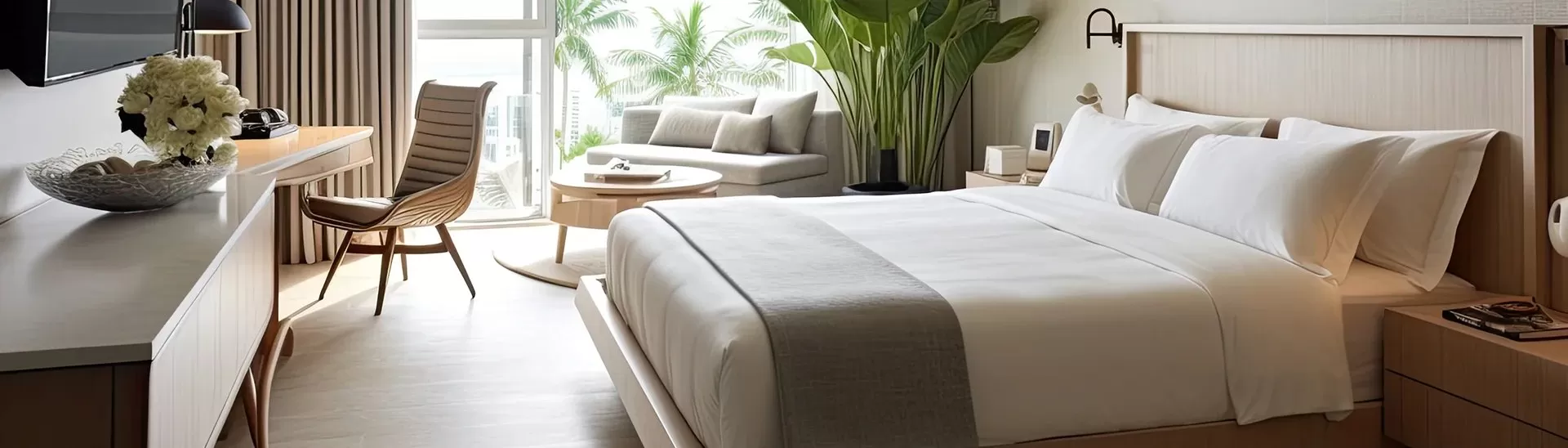
If you have ever been to a well-painted white space, there's an immediate sense of spaciousness and calm. This particular aspect is difficult to replicate with any other colour, and it's why white remains the single most chosen wall colour in homes across the world.
But white is far more layered than it first appears. It isn't one colour; it’s a mixture of several other colours. There are whites that feel warm and enveloping, whites that feel crisp, whites with a barely-there blush of pink or the faintest trace of grey.
Getting white right means understanding those differences, because the wrong white on your walls can make a room feel cold when you wanted calm, or make it look flat when you wanted fresh. This guide covers white from every angle: what it's made of, how to adjust its tone, and how to use it confidently across different rooms in your home.
White Colour Composition
White is the presence of all visible light wavelengths combined. Pure white in paint is a manufactured base, not a mix, and every variation of white is created by adding small measured amounts of colour into that base.
What Colours Make White?
● Pure white cannot be produced by mixing other colours together, unlike secondary colours that are born from two primaries. White stands outside that system.
● What you can do is influence the character of white significantly. Adding a tiny amount of yellow or ochre creates a warm, creamy white.
● A touch of grey pulls it toward a cooler, more contemporary tone. A trace of blue produces a crisp, almost luminous white. A hint of pink creates the softest blush-white imaginable.
● Understanding these tint relationships is what separates a thoughtfully chosen white from one that ends up looking wrong in the room despite looking perfectly fine on a paint chip.
Also Read: Create Stunning Walls with White Colour Schemes
How to Make White Colour?
Since pure white can't be mixed from scratch, working with white in a practical context means either starting with a white base and tinting it or choosing a pre-mixed white shade. Here's how to approach tinting white yourself:
- Start with the purest white base you have. Any existing tint in your base will carry through and affect your final result, sometimes in ways that are hard to predict.
- Decide the direction before you start. Warm white, cool white, or near-neutral; having a clear target prevents aimless adjustments.
- Add your tinting colour in the smallest possible amounts: A small amount of any other colour into a full tin of white is often more than enough to shift the tone visibly.
What Two Colours Make White Colour?
While pure white can't be produced by mixing, here's how adding different colours to a white base creates distinct tinted white shades:
|
Base + Tint
|
Tone Produced
|
|
White + Yellow Ochre
|
Warm, creamy off-white
|
|
White + Grey
|
Cool, contemporary neutral white
|
|
White + Blue
|
Crisp, cool white
|
How to Make White Colour by Mixing Two Colours
When tinting white for specific effects, the ratio between white base and tint colour determines how subtle or pronounced the result is:
|
Ratio (White: Tint)
|
Dominant
|
Result
|
|
98:2
|
White dominant
|
Barely-there tint
|
|
95:5
|
White dominant
|
Soft, clearly warm or cool white
|
|
85:15
|
Shifting toward tint
|
Strong off-white; approaches pastel territory
|
|
80:20
|
Balanced
|
Full off-white or very light pastel
|
How to Make Light White Colour
Light white shades come from keeping your base as pure as possible and adding only the faintest amount of blue or leaving it unadjusted entirely. A clean, bright white with no warm tint reflects maximum light and makes rooms feel more open and airy than almost any other colour choice.
Also Read: 11 Ceiling Paint Design With White Colour
How to Make Dark White Colour
"Dark white colour" is really the territory of off-whites, warm whites, and deeply tinted whites that have moved toward greige, cream, or pale neutral. These shades still appear as white in context but carry enough depth to feel more natural and layered than a flat, bright white. Some beautiful shades in this range:
● Concrete Step - A white with a cool grey undertone.
● Winter's Chill - A faintly blue-toned white.
● Musky Tip - A warm, earthy off-white.
● Cloudy Violet - A white with an almost imperceptible lavender undertone.
These are all technically white shades, but each brings a distinct personality that shifts how a space feels.
How to Adjust White Colour Tone
Once you have a white base, you can steer the tone deliberately in three directions - and each produces a noticeably different result on the wall.
● Warm white - Add a trace of yellow, ochre, or raw umber. Warm whites feel cosy and inviting. They suit living room walls, bedrooms, and dining areas.
●Cool white - Add a trace of blue or grey. Cool whites feel crisp, clean, and modern. They work particularly well in kitchens and bathrooms.
● Muted white - Add a small amount of a complementary tone (typically a soft grey or a very diluted White) to reduce the starkness.
Popular White Shades in Nerolac Paints Colour Catalogue
Nerolac's white range is varied; each shade has a distinct character that goes well beyond "just white."
Converse White
A clean, balanced white that leans neither warm nor cool. Converse White colour works in almost any room type and blends with any type of decor.
Raft White
A soft, slightly warm white with a gentle creaminess. Raft White colour makes rooms feel settled and comfortable.
White Sails
White Sails colour is light, fresh, and airy. This shade has a quality that evokes open windows and good circulation - excellent in rooms that need to feel more breathable.
Snow Storm
A cool, crisp white with a very slight blue undertone. Snow Storm colour is bright and clean in direct light, it gives kitchens and bathrooms a polished finish.
Chymes
A warm white with depth. Chymes colour is more interesting than a flat white, but still clearly in the white family. Works well in living rooms and hallways where you want warmth without colour.
Windchill
Windchill colour is a cool, slightly grey-white that feels contemporary and restrained. Suits modern interiors with clean lines and minimal ornamentation.
Feathery
Soft and barely-there warm, like the lightest possible application of cream. Feathery colour is delicate in quality and particularly beautiful in bedrooms with natural light.
Flapping Wings
Flapping Wings colour is an interesting off-white with a subtle variation to it. Not immediately warm or cool - it shifts depending on the light in the room.
Ready-Made White Colour Options
Mixing and tinting white yourself is worth doing for small art or craft projects. For painting walls, pre-made white shades offer significant practical advantages:
● Tint consistency - Factory-tinted whites maintain exactly the same tone across every litre, which is critical for large surface coverage where batch variation shows immediately.
● Formulation stability - Pre-made shades are balanced for consistent drying, adhesion, and finish performance.
● Efficiency - No guesswork, no wasted base white, no test batches that don't match the wall result.
These four Nerolac shades are popular, ready-to-use choices:
● Snow Storm
● Chymes
● Windchill
● Feathery
Before finalising any shade, use Nerolac's Colour Visualiser tool, which helps preview each white shade on your walls.
Also Read: Detailed Guide To Different Types Of White Paint And Primer
Why White Colour Looks Different on Walls
White is arguably the most light-sensitive colour you can put on a wall. Small changes in the environment produce visible shifts in how it looks.
● Lighting - Warm bulbs pull white toward yellow and cream. Cool daylight makes it appear brighter and slightly blue. A north-facing room with indirect natural light can make the same white shade look considerably greyer than it appears in a south-facing room.
● Surface texture - Textured walls create micro-shadows that make white appear uneven in tone - lighter on raised surfaces, slightly darker in recessed areas. This effect is subtle on white but still visible, particularly with raking light from windows.
● Paint finish - Matte white feels softer, warmer, and more forgiving of wall imperfections. Satin and gloss whites reflect more light, look crisper and brighter, but also reveal surface irregularities more clearly.
Common Mistakes to Avoid When Mixing White Colour
● Adding too much tint at once: The most common error when customising white. Even a small overshoot in the wrong direction shifts white into clearly off-white or pastel territory very quickly.
● Incorrect ratios: For large wall quantities, guessing tint amounts leads to inconsistent batches. If you need to remix halfway through a project, matching the original tint ratio by eye is nearly impossible.
● Not testing on the actual wall: White is particularly deceptive on mixing trays and paper. The dried result on your specific wall, under your specific lighting, is the only reliable test.
Mixing White Colour for Wall Paint vs Wall Art
The approach differs meaningfully between the two contexts. For wall paint, consistency is everything. Large surfaces make any tonal variation between batches immediately obvious. Mix the full quantity you need in a single session, with properly measured tint ratios, and store any excess carefully for touch-up work.
For wall art and canvas work, white behaves as both a base and a mixing partner. Artists use white to control opacity, lighten other colours, and create tonal gradations within a single painting. Here, slight batch variations add life rather than creating problems.
Where to Use White Colour
White is genuinely one of the most adaptable colours in the home - the shade and finish just need to match the room's purpose and light conditions.
|
Room
|
Best White Shade
|
Placement
|
|
Living Room
|
Chymes, Flapping Wings
|
Full room or all four walls with warm accents
|
|
Bedroom
|
Feathery, Raft White
|
All walls for a soft, restful atmosphere
|
|
Kitchen
|
Snow Storm, Windchill
|
Full room, cabinets, or backsplash wall
|
|
Balcony
|
Converse White, White Sails
|
Full wall or trim - holds well in outdoor light
|
Also Read: 10 Guest Room Colour Combination and Paint Ideas
White Wall Colour Combinations for Your Home
● White and Lilac - One of the most quietly beautiful pairings in interior wall design. Lilac adds the faintest warmth and personality to a white space without disrupting its openness.
● White and Beige - A tonal two colour combinations that feels layered rather than flat. Warm white walls with beige upholstery, rugs, and furniture create a cohesive quality that feels genuinely comfortable.
● White and Violet - More dramatic than the white-lilac pairing but still elegant. A deep violet accent walls appears bright and dramatic.
● White and Red - A pure white room with a single red statement wall or bold red furnishings has a graphic, high-energy quality that works well in living rooms and dining room colour.
How Nerolac Paint Can Help Your Walls with White Colour
White might seem like the easiest choice, but getting it right on a wall - especially across a full room - requires more care than most people anticipate. The finish quality, the evenness of coverage, and the interaction between the paint and the wall surface all determine whether the final result looks polished or disappointing.
Nerolac's professional painting service starts with an assessment of the space before any paint goes on. Our professionals consider natural light levels, room proportions, and how the room is used day to day before recommending a specific white shade.
Surface preparation is taken seriously, particularly for white shades where any unevenness in the base layer shows up clearly once the paint dries. Proper priming, levelling, and wall preparation prevent the uneven patches, faint shadows, and surface marks that are far more visible under a white finish than under deeper colours.
Visualise Your Perfect White Shade with Nerolac Tools
Before you commit to a shade, it helps to see it, compare it, and know how much of it you'll need. Nerolac makes all three steps simple with a set of tools designed specifically for that process.
Colour Visualiser
Not sure how dark White will look in your living room? Nerolac's Colour Visualiser lets you digitally apply any shade to a space to see it in context. It takes the guesswork out of colour decisions entirely.
Colour Catalogue
You can also browse the full range of white colour shades organised by tone and finish. The Colour Catalogue makes it easy to compare shades side by side before shortlisting.
Paint Budget Calculator
Once the shade is locked in, the next question is always how much paint to actually buy. Nerolac's Paint Budget Calculator works that out for you and gives you a realistic figure. It's a small step that saves you from both the frustration of running short mid-wall and the waste of buying three extra litres you'll never use.











 संपर्क में रहो
 ऐप डाउनलोड करें
