


What Are the Best Paint Brushes, Rollers & Painting Tools for Walls?
Published: 12 Sep 2025 | Modified: 13 Nov 2026
Quick Summary
The right painting tool makes wall painting faster, neater and more professional. Essential wall painting tools include flat and angled brushes, rollers with suitable nap, paint trays, extension poles, putty knives, sandpaper, masking tape and drop cloths. A complete house painting tools list also covers ladders, scrapers, stirrers and texture tools for designs. Choosing quality home painting tools suited to your surface ensures even coverage and less wastage.

Create Your Dream Home With Our Painting Experts
Fill the form below to book a free site evaluation by Nerolac Nxtgen painting Services expert
TABLE OF CONTENTS
A blank wall can feel like a fresh start or a small puzzle. The right Wall Painting Tools turn that choice into a calm, tidy job. If you prefer Brush Painting, edges and trims feel easy. If you want speed, a roller brings smooth, even layers. You can also keep it simple with Paint and Brush when the room is full of furniture. In this guide, you will learn how each Painting Tool works, when to use it, and how to keep results consistent.
What Are the Main Types of Painting Tools Every Homeowner Should Know?
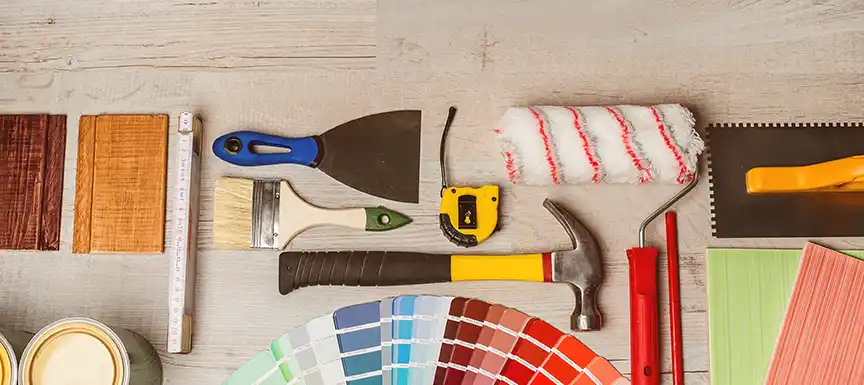
A small, reliable kit carries most home projects from start to finish. Build your set with the pieces below, then add extras when a room demands them.
Paint Brushes for Control and Edges
- Keep a two or two and a half inch angled sash brush for cutting in around ceilings and frames.
- Add a small round or artist-style brush for tight corners and switch plates.
- Choose softer bristles for trims and a slightly stiffer brush for rough areas.
- Hold the ferrule between thumb and finger for smooth Brush Painting without wrist strain.
Paint Roller for Fast, Even Coverage
- Short pile sleeves suit smooth plaster and fresh putty.
- Medium pile sleeves reach a light texture and gentle orange peel.
- Long pile sleeves help on brick, stone, or exterior render.
- A sturdy frame with smooth bearings and an extension pole makes high sections comfortable.
Spray Paint Machine for Large, Open Spaces.
- Airless sprayers push paint through a tip to form a flat fan pattern.
- Strain paint and practise on cardboard to learn distance, speed, and overlap.
- Mask carefully to control overspray and ventilate the room before you start.
Helpers That Save Time
- A tray or scuttle keeps colour contained and loading predictable.
- A bucket grid evens out the roller sleeve and reduces drips.
- Masking tape protects skirting and window beads.
- A scraper, filler, sanding block, and a damp sponge cover minor repairs and cleanups.
Although automated tools are taking over most human tasks, it is essential for a professional painter to supervise and undertake your home painting project. Automated tools require humans for operations and Nerolac’s NXTGEN Services can help you get a professional to seamlessly transform your home.
What Are the Speciality Wall Painting Tools for Professional Finishes?

When the room has complex lines, alcoves, or textures, add focused tools to make neat work easier.
Edging and Line Control
- An edging guard supports clean junctions between walls and ceilings.
- A corner roller reaches internal angles without leaving ridges.
- A feathering brush softens the joins between wet and drying sections.
Texture and Effects
- Stippling brushes tap gently to blend patches on a repaired area.
- Sponges add depth to a feature wall with two close shades layered lightly.
- Patterned rollers repeat simple designs for a quick accent.
Trim and Mouldings
- A small sash brush shapes curves on skirting and picture rails.
- Comb tools suggest straight faux grain on timber after a base coat.
- A mini foam roller levels door panels without deep texture.
Reach and Visibility
- A locking extension pole reduces ladder trips and keeps strokes straight.
- A slim work light set to the side angle reveals missed spots before the coat dries.
How to Select the Right Painting Tool for Your Project?

Clear choices reduce rework and make painting feel lighter. Think about the points below before you open the tin.
Match the Surface
- Fresh, smooth plaster pairs with soft, angled Paint Brushes and a short-pile Paint Roller.
- Slightly rough walls accept a medium pile sleeve that reaches dips without leaving excess texture.
- Brick or stone responds to a long pile sleeve, with a stiff brush for mortar lines.
Match the Paint
- Water-based emulsion works well with nylon or mixed bristle brushes and synthetic roller sleeves.
- Oil-based trim paint can flow nicely with natural bristle brushes that carry paint in the tips.
- If you plan to use a Spray Paint Machine, strain the paint and match the tip size to the product label.
Match the Finish You Prefer
- For crisp borders, rely on Brush Painting around every edge, then roll the centre.
- For a large hall or a long corridor, a sprayer can feel efficient once masking is complete.
- For many minor repairs, use detail brushes and mini rollers to blend patches calmly.
Match your Comfort and Cost
- Choose balanced handles that fit your grip to limit fatigue.
- A roller frame with smooth bearings turns cleanly and curbs spatter.
- An adjustable extension pole keeps your shoulders relaxed when you reach high areas.
How to Apply Paint with Brushes, Rollers, and Spray Paint Machines?

Good preparation makes the first coat predictable and the second coat easy. Work in tidy steps and keep a wet edge where you can.
Prepare the Room
- Cover floors and furniture with clean sheets.
- Scrape loose flakes, fill small holes, and sand until the palm feels a steady surface.
- Wipe dust with a damp cloth and stir paint slowly to blend settled solids.
Brush Painting Method
- Dip only the bottom third of the bristles, then tap off the excess.
- Start with cutting in. Hold the brush like a pen and ease the line to the edge on the second pass.
- Keep light pressure and finish each section with gentle, one-directional strokes.
Rolling Method
- Dip the sleeve partway, then roll on a tray or grid to load evenly.
- Work in a soft zigzag, fill in with up and down strokes, and overlap passes by a third.
- Level the sheen with final, light strokes all in one direction and reload often.
Spray Paint Machine Method
- Practise on cardboard to set the distance and speed.
- Move before squeezing the trigger, keep the gun square to the wall, and release after the edge.
- Overlap each pass by half, spray edges first, then fill the centre with steady, parallel sweeps.
Between Coats
- Allow the surface to dry as directed on the tin.
- Lightly sand nibs, remove dust, and apply the next coat with the same calm rhythm.
Safety and Comfort Pointers
- Ventilate the room and keep a fan running while you work.
- Wear a mask and safety glasses when sanding or spraying properly.
- Keep handles dry, wipe your hands, and rest your grip between sections.
Troubleshooting Common Issues
- If you see lap marks with a Paint Roller, reload faster and finish with one-direction strokes.
- If brush marks hold on trims, add water to the paint and use longer passes with Paint Brushes.
- If the Spray Paint Machine spits, clean the filter, strain the paint, and check that the tip size suits the product.
How to Maintain and Clean Your Painting Tools for Long-Term Use?

Clean tools as soon as you finish and store them where dust cannot reach them. These small habits help tools last and perform steadily.
Paint Brushes
- For water-based paints, rinse in warm water while combing bristles with a brush comb or an old fork.
- Keep rinsing until the water runs clear, then shake out moisture.
- Wrap bristles in paper to keep the shape and store flat or hanging so the tips do not
Brushes Used for Oil-Based Paints
- Wipe off excess on the card, then clean in the correct solvent inside a lidded container.
- Swirl gently, move to a second container for a final rinse, then wash with mild soap and warm water.
- Dry, wrap, and label this brush for primers or undercoats so your best tools stay fresh.
Paint Roller Sleeves and Frames
- For water-based paints, rinse sleeves thoroughly and use a roller spinner to remove trapped water.
- For oil-based paints, work the sleeve in cleaner until no colour releases.
- Wash frames and trays with warm water and a little washing-up liquid, then dry to limit rust.
Spray Paint Machine
- Flush the hose and gun with clean water or the correct solvent until the fluid runs clear.
- Remove the tip and filter, and clean both with a soft brush.
- Lightly oil moving parts if advised in the manual, and coil hoses loosely for storage.
Storage Basics
- Keep sleeves in clean bags, label pile length, and store tips and filters in a small box.
- Group Wall Painting Tools together so touch-ups start without a search.
Choosing the Right House Painting Tools and Equipment
Choosing house painting tools and equipment is as important as choosing colours. The finish you see tomorrow begins with what you hold today. The first step would be to create room by pushing furniture in the middle and laying down dust sheets on the floor, which are non-bunching woven dust sheets. Clean walls with a wet cloth, grease kitchen spots, and soak any spots which have mould and leave the surface dry. A screw pouch should be kept to avoid losing anything, and switch plates should be labelled.
Also Read: Using Paint Rollers and Brushes Tips
Preparing and Repairing Wall Surfaces with Wall Painting Tools
Repairs come next. A flexible putty knife spreads filler into hairline cracks and nail holes, while a stiffer scraper lifts loose flakes without gouging plaster. Sand the repair smooth, then feather the edges so the patch blends cleanly. A sanding block gives better control than loose paper and keeps pressure even.
Choosing Paint Brushes for Walls and Edges
Two flat brushes in different widths cover most walls and doors. An angled sash brush helps you cut neat lines along ceiling edges, skirting, and window beading. For large areas indoors, a nine-inch roller on a sturdy frame is a sensible default. Match the pile to the wall. Short pile suits smooth putty finishes, medium pile covers light texture paints, and long pile reaches into coarse exterior surfaces.
Using Rollers and Mini Rollers Efficiently for Home Painting
A tray with liners works for small rooms. On bigger runs, use a bucket with a roller grid to keep loading steady. Stir at the start and again mid-job. A mini roller shines behind pipes and inside alcoves. Cut in first, then roll while the edge is still wet. Work in sections, roll a gentle W, fill the shape, and backroll lightly to level the texture.
Safety Tips for Using Painting Equipment
Safety makes the work calmer. Wear goggles, gloves, and a suitable mask. Switch off the power if you remove switch plates, and turn off ceiling fans before rolling overhead. Use a stable ladder and avoid stretching to reach a corner.
Also Read: Simple DIY Wall Painting Design Ideas
Adjusting for Weather Conditions in India
Weather matters across India. In the monsoon, allow extra drying time and open opposite windows for cross ventilation. In cooler northern winters, the start time is late morning, so walls are not cold. In dusty summers, wipe before each coat.
Cleaning and Maintaining Your Textured Painting Tools
Finish strong by cleaning tools the same day. Rinse water-based coats until clear, use the recommended cleaner for solvent coats, comb bristles, spin rollers, and store everything dry. Plan the order of rooms, learn your rhythm in a bedroom before the living room. Spend on a rigid frame, good covers, and an extension pole.
Build Your Kit Around Your Walls and Pace
Build your kit around your walls and your pace, not around every tool on the shelf. For most Indian homes, careful preparation, a sensible mix of brushes and rollers, an extension pole for ceilings, and disciplined masking deliver tidy, reliable results. Sprayers have a place in big, empty spaces, but day-to-day repaints in lived-in flats are usually calmer with brush-and-roller methods. Work with the weather; keep sections small enough to manage. Clean tools on the same day so they are ready for the next room.
Also Read: Nerolac's Expert Tips for Home Painting Services
Simple Starter Plan for Painting
If you are unsure where to start, try this simple plan. On smooth plaster, use a short-pile roller and an angled brush for edges. On slightly textured areas, swap to medium pile. Cut in, roll, level, and move on without fuss. Keep your ladder sure-footed, your tape pressed firmly, and your light source close by to spot misses. Small habits like these save retouches, save time, and keep the project peaceful.
Plan the Order of Rooms for Efficiency
One more practical rule is to plan the order of rooms. Start with the least used bedroom, learn your rhythm, then move to the living room, where small flaws show first under evening lamps. Keep a small diary of settings, roller piles, and colour codes per room. In a rented flat, choose tools that control splatter and allow easy clean-up around cupboards and fans.
Extra Tips for Older Plaster Homes and Hot Weather
In older plaster homes, spend extra time on scraping and sanding. When festivals approach, plan to paint early mornings or late afternoons to avoid the harsh heat. Above all, tidy prep and patient coats beat any fancy gadget everywhere.
Also Read: Affordable Painting Services can Transforming Your Space
Key Takeaways
- Use angled brushes for edges, corners and cutting in along ceilings.
- Rollers with the right nap give smooth, even coverage on large walls.
- Masking tape and drop cloths protect floors, trims and furniture.
- Keep putty knives and sandpaper ready for surface preparation.
- Extension poles help paint ceilings and tall walls safely.
- Clean tools immediately after use to extend their life.
Nerolac Paints, a leading paint company in India offers a wide range of wall paint colours & painting services & solutions for homes & offices.
-
Best Colour Combination For Walls To Elevate Your Home Interiors Best Colour Combination For Walls To Elevate Your Home Interiors
Intoduction:In 2025, harmonious colour schemes for individuality and…
-
Best Green Colour Combinations for Walls – Schemes & Design Ideas Best Green Colour Combinations for Walls – Schemes & Design Ideas
Introduction:Green has long been a favourite choice in home decor…
-

What Colours Match with Blue? 14 Colour Combinations with Blue for Your Home What Colours Match with Blue? 14 Colour Combinations with Blue for Your Home
Blue is a universally popular colour for décor and design; choosing a colour…
-
Recent Blogs
- Wooden House Design: 8 Kashmiri-Inspired Ideas for Warm and Elegant Homes
- Kashmiri Home Interior Design: 5 Ideas to Bring Kashmir's Beauty Into Your Home
- 7 Beautiful Kashmiri Home Design Ideas Inspired by Noor-e-Kashmir
- Cloud Dancer Colour of the Year – Meaning, Combinations, Interior Ideas and Trends
- How To Make Yellow Colour: Tips for Perfect Wall Paint Shades & Home Décor Ideas
-
Get in Touch
Looking for something else? Drop your query and we will contact you.
FAQs
Which wall painting tools are best for Indian homes?
A basic kit should include a medium-nap roller for smooth plastered walls, an angled synthetic brush for edges, a flat brush for trims, and a sturdy paint tray. Add an extension pole for ceilings, masking tape, drop cloths, a putty knife and sandpaper for preparation. For textured walls, choose a thicker nap roller. Quality tools reduce streaks and paint wastage.
How do I choose home painting tools for my project?
Consider the surface type, paint type and area size. Smooth walls need short to medium-nap rollers, while rough or textured surfaces need longer nap. Water-based paints suit synthetic brushes, while oil-based enamels suit natural bristles. Large areas benefit from wider rollers and extension poles. For detailed trims and furniture, choose smaller, fine-tipped brushes.
What should a complete house painting tools list include?
A complete list includes brushes of various sizes, rollers and roller covers, paint trays, extension poles, ladders, masking tape, drop cloths or plastic sheets, putty knives, scrapers, sandpaper or sanding blocks, paint stirrers, buckets, rags and safety gear like gloves and goggles. Texture tools, stencils and sprayers can be added for decorative or large-scale projects.
What are the important paint guide tools to follow?
Paint guides or edgers help achieve clean lines where walls meet ceilings, trims or windows without extensive taping. Painter's tape ensures crisp borders for stripes and geometric designs. Spirit levels and chalk lines help mark straight patterns. Colour charts and sample swatches guide shade selection. Using these tools improves accuracy and gives a professional finish.
What are trending painting design tools this year?
Texture rollers with patterned sleeves create fabric, stone or floral effects easily. Reusable stencils for geometric and botanical designs are popular. Sponges, combs and trowels are used for Venetian, stucco and limewash finishes. Mini rollers and foam brushes suit DIY murals. Paint sprayers are increasingly used for even coverage on furniture and large exterior walls.
How do I maintain painting tools after use?
Clean brushes and rollers immediately after use, with water for water-based paints and a suitable thinner for oil-based paints. Remove excess paint by scraping before washing. Reshape brush bristles and hang them to dry. Dry roller covers standing upright. Store tools in a dry place. Well-maintained tools last longer and give consistent results in future projects.


Get in Touch
Looking for something else? Drop your query and we will contact you.
Latest Happenings in the Paint World
Get some inspiration from these trending articles



Popular Post
Popular Searches
What’s Trending in Bedrooms
Explore Trending Living Room Ideas
- Living Room Colour Combination
- Modern Two Colour Combination for Living Room
- Wall Texture for Living Room
- Vastu Colours for Living Room
- Wall Texture Design for Living Room
- Living Room Paint Ideas
- Living Room Design Ideas
- Paint Colour Ideas for Living Room
- Living Room TV Wall Designs
- Green Living Room Walls
Kitchen Ideas People Love
Explore Trending Ceiling Ideas
Study Room Ideas in Demand
Explore Wall Paint Categories
Handpicked Colour Inspirations
- Accent Wall Design
- Bedroom Design Ideas
- Exterior Wall Colour Design Ideas
- Interior Wall Colour Design Ideas
- Kitchen Design Ideas
- Living Room Interior Design
- Geometric Wall Design Ideas
- Home Colour Combination Ideas
- Home Décor Ideas
- Mural Wall Paint Design Ideas
- Office Space Design Ideas
- Puja Room Design Ideas
- Texture Design Ideas
- Festival Painting Ideas
- Paint Colour Chart
- Wall Painting Designs
- Wood Wall Décor Ideas
- Mural Wall Paint Design
- Hall Design Ideas
- Gate Colour Design
- Exterior Wall Colour Design
- Door Colour Design Ideas
-
 Get in Touch
-
Store Locator
-
 Download App
×
Get in Touch
Looking for something else? Drop your query and we will contact you.

