How To Make Maroon Colour: Tips for Perfect Wall Paint Shades & Home Décor Ideas

How To Make Maroon Colour: Tips for Perfect Wall Paint Shades & Home Décor Ideas

Published: 12 Jun 2026 | Modified: 12 Jun 2026

Quick Summary

● Maroon is made by mixing red colour with a small amount of blue and sometimes black.

● Light maroon colour comes from adding white gradually to a maroon base.

● Dark maroon colour deepens with additional black or blue in careful increments.

● Lighting conditions, wall surface, and paint finish all significantly affect how a maroon shade looks once it's on your walls.
Create Your Dream Home With Our Painting Experts

Fill the form below to book a free site evaluation by Nerolac Nxtgen painting Services expert

I have read and agree to the  terms & conditions and the  consent.

*5 Day Painting available in selected cities only, subject to site evaluation.

TABLE OF CONTENTS

There's a reason maroon has appeared in the most enduring interiors across centuries: it brings a richness that lighter, safer colours simply cannot replicate. More homeowners are choosing maroon today, not just as a feature wall accent but as a full-room commitment. The right maroon colour shade creates an intimacy that makes the space feel genuinely private and enveloping. Knowing how to make maroon colour puts you in control of one of the most beautiful tones available for interior walls.

Maroon Colour Composition

Maroon is a deep, dark red produced by combining red with small amounts of blue colour and sometimes black. Red is the dominant primary colour, which provides the warmth and intensity. Blue cools and darkens the red, shifting it from bright crimson toward the deep, wine-like quality that defines maroon. The ratio between them determines whether the final maroon colour shade leans warm and russet or cool and plum-adjacent.

What Colours Make Maroon?

      Maroon starts with red, a primary colour, and builds from there. Blue is added in small quantities to deepen and cool the red enough to cross from scarlet into maroon territory.

      On the colour wheel, maroon's complementary colour falls in the green colour family. A small addition of forest green colour or olive will mute the saturation of maroon and create a more complex, dusty tone.

      The key variable in understanding the different types of maroon colour is always the red base.

Also Read: 10 Maroon Colour Combination

How to Make Maroon Colour

Knowing how to make maroon colour is fundamentally about control - this is a shade where small additions produce large shifts, and the mixing needs to happen incrementally.

  1. Start with a red base - Use a pure, high-quality red; crimson is the most reliable choice for a classic maroon, as it has less orange in it than other reds.
  2. Add blue in very small amounts - This is where maroon is made; a little blue goes a long way, so add it drop by drop rather than in measured pours.
  3. Mix completely before assessing - Never judge a partially mixed colour; full incorporation is essential before deciding whether to add more blue.
  4. Assess the tone - If you want to know how do you make maroon colour that leans darker, this is the stage to add a trace of black.
  5. Add black only if needed - Black affects red's warmth aggressively; use it in the smallest possible amounts to deepen without dulling.

What Two Colours Make Maroon Colour?

When working out how to make maroon colour by mixing two colours, here's how different pairings behave:

Complementary Pair

Tone Produced

Crimson Red + Dark Blue

True, classic maroon - clean and balanced

Scarlet Red + Prussian Blue

Warm, slightly orange-tinged maroon

Magenta + Ultramarine Blue

Deep, cool maroon - leans toward burgundy

How to Make Maroon Colour by Mixing Two Colours

Ratios determine the entire character of the maroon you end up with.

Ratio (Red: Blue)

Dominant Colour

Result

90:10

Red dominant

Rich, warm maroon - closest to deep red

80:20

Red dominant

True balanced maroon colour

70:30

Red dominant

Deeper, cooler maroon - leans toward wine

60:40

Moving toward balance

Dark, purple-adjacent maroon

50:50

Equal parts

Deep burgundy - moves away from maroon


Also Read: 10 Painting Ideas for North & South Facing House

How to Make Light Maroon Colour

Light maroon colour comes from folding white into your mixed maroon base - slowly and deliberately. Add white colour in small increments, mixing each time, and assess in natural light before adding more. In bedrooms and reading rooms, a light maroon colour on the walls creates a warmth that feels intimate without being as committed as a full-depth maroon.

How to Make Dark Maroon Colour

To create a dark maroon colour, deepen your base mix by adding a trace of black or increasing the blue proportion slightly - while always keeping red dominant. Black darkens faster than blue and is less forgiving, so blue is often the better route for controlled deepening.

       Maroon Purple - A deep maroon that carries visible violet colour undertones.

       Strange Maroon - A deep, complex dark maroon.

How to Adjust Maroon Colour Tone

Once you have your base maroon, you can steer the tone deliberately in three directions.

      Warm maroon: Add a touch more red, or a trace of orange-red. This brings maroon back toward the russet, brick-red end of the spectrum.

      Cool maroon: Add a trace more blue, or a hint of grey colour. This pushes maroon toward burgundy colour and wine tones.

      Muted maroon: Add a very small amount of olive green colour, maroon's complementary family, to reduce saturation without losing depth.

Popular Maroon Shades in Nerolac Paints Colour Catalogue

Nerolac's maroon range offers deep, characterful shades that cover the full range of warm and cool maroon territory.

Maroon Purple

Maroon Purple colour is a rich, deep maroon that carries violet undertones without fully committing to purple colour. This shade works beautifully in living room walls and formal dining spaces with warm lighting.

Strange Maroon

Strange Maroon colour is a deep, slightly unpredictable maroon that shifts in different lighting conditions. For rooms that need a colour with genuine character, this is an excellent choice.

Ready-Made Maroon Colour Options

Mixing maroon yourself is satisfying for small creative projects. For wall painting, pre-mixed shades offer clear advantages:

       Tone consistency across every litre - Deep colours like maroon are the hardest to batch-match; factory-mixed paints ensure identical tone throughout the full project.

       Depth accuracy - Getting dark maroon right through DIY mixing requires precision that's difficult to maintain across large quantities; pre-made paints remove this variable entirely.

       Time and material efficiency - No wasted paint, no failed test batches, no mid-project corrections at the mixing stage.

These two Nerolac shades are strong, ready-to-use choices for maroon walls:

      Maroon Purple

      Strange Maroon

Before buying, use Nerolac's Colour Visualiser tool, which is far more useful than relying on a paint chip, especially for deep, saturated colours like maroon.

Also Read: Trending Bedroom Colour Ideas & Designs

Why Maroon Colour Looks Different on Walls

You chose the shade carefully, tested it in the store, felt completely confident - and then it looked different on your wall. Here’s why:

      Lighting - Maroon is deeply sensitive to light colour temperature. Warm incandescent or warm LED lighting amplifies the red undertones and makes maroon feel richer and more russet. Cool lighting pulls out the blue in the mix and makes it look darker.

      Surface texture - Rough or uneven walls create micro-shadows across the surface that make maroon appear inconsistent.

      Paint finish - Matte finishes absorb light and give maroon a velvet-like, deeply rich quality. Satin and gloss finishes reflect light and make the same maroon appear brighter and more intensely saturated.

Common Mistakes to Avoid When Mixing Maroon Colour

      Adding too much blue at once - Too much blue too quickly tips the mix into purple territory, and it's hard to recover from without adding significant amounts of red back in. Add blue one small drop at a time.

      Incorrect ratios for large batches - Measure your ratios from the beginning and stick to them throughout the mixing process.

      Skipping the wall test - Maroon looks different on mixing trays and paper swatches than it does dried on a real wall surface. A test patch on your actual wall is the only reliable indicator before full application.

Mixing Maroon Colour for Wall Paint vs Wall Art

Maroon is a deep, tonally complex colour that makes any batch variation immediately obvious on a wall. Mix everything you need in one session, in properly measured quantities, and produce more than your estimate to allow for touch-ups.

For wall art and canvas work, maroon is an extraordinarily expressive colour to work with. It deepens shadows beautifully, warms skin tones organically, and creates powerful contrast against pale yellows and dusty greens.

Where to Use Maroon Colour

Maroon works in more rooms than its intensity might suggest - the key is matching the shade depth and finish to the room's size and light.

Room

Best Maroon Shade

Placement

Living Room

Maroon Purple, Strange Maroon

Feature wall or full room with neutral or warm furnishings

Bedroom

Strange Maroon

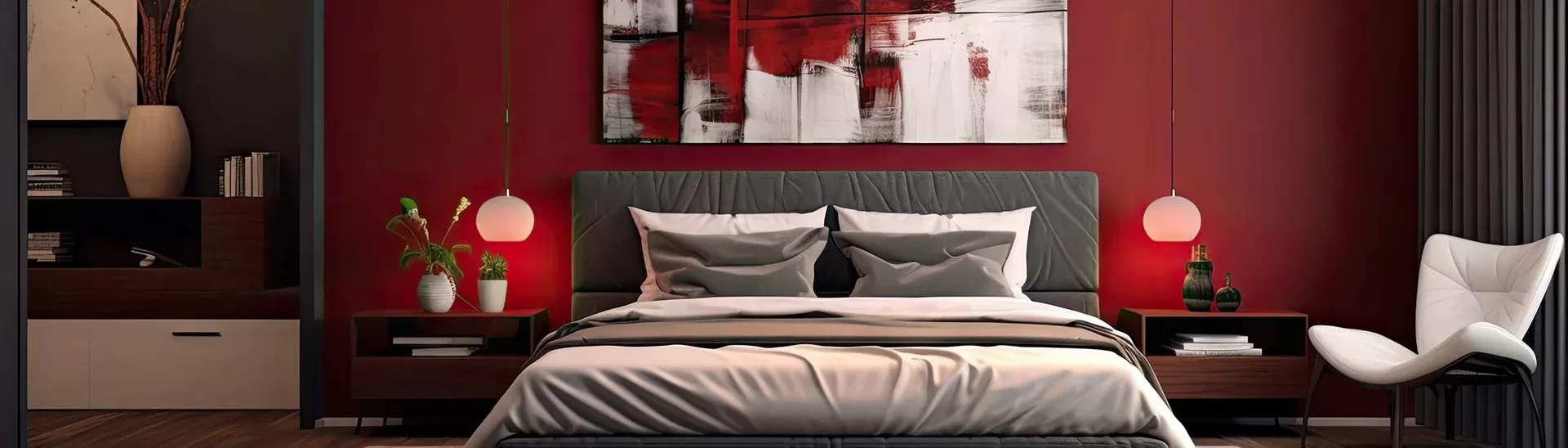
All walls for intimacy or a single accent wall

Kitchen

Strange Maroon

Lower cabinets or a single backsplash wall

Balcony

Maroon Purple

Full wall or bold border trim

Maroon Wall Colour Combinations for Your Home

      Maroon and Pink - A pairing that works when blush or dusty pink is used alongside maroon rather than bright or hot pink colour.

      Maroon and Yellow - High contrast and full of energy. Mustard yellow colour or golden ochre against maroon walls creates a combination that feels bold without being chaotic.

      Maroon and Dark Green - One of the most naturally powerful combinations in interior wall design. Both colours are deep, earthy, and historically rooted, and together they create a space that feels layered.

      Maroon and Grey - Mid-tone or cool grey alongside maroon provides enough contrast to prevent the two colour combinations from feeling heavy, while keeping the overall colour palette restrained and sophisticated.

Also Read: Living Room Curtain Colour Combinations Ideas

How Nerolac Paint Can Help Your Walls with Maroon Colour

Deep, saturated colours like maroon demand more from the application process than lighter shades do. Uneven coverage, surface imperfections, and incorrect lighting assessments all show up more dramatically on dark colours - and maroon is one of the less forgiving choices in this respect.

Nerolac's professional painting service addresses this from the first step. Our team assesses each room before any paint goes on - looking at wall dimensions, natural light levels throughout the day, and the function of the space before recommending the right maroon shade for those specific conditions.

Thorough priming and levelling ensure the wall surface is properly prepared before the topcoat is applied, thus preventing the streaks, roller marks, and patchy coverage that are far more visible on dark colours than on neutral colours.

Visualise Your Perfect Maroon Shade with Nerolac Tools

Before you commit to a shade, it helps to see it, compare it, and know how much of it you'll need. Nerolac makes all three steps simple with a set of tools designed specifically for that process.

Colour Visualiser

Not sure how dark maroon will look in your living room? Nerolac's Colour Visualiser lets you digitally apply any shade to a space to see it in context. It takes the guesswork out of colour decisions entirely.

Colour Catalogue

You can also browse the full range of maroon colour shades organised by tone and finish. The Colour Catalogue makes it easy to compare shades side by side before shortlisting.

Paint Budget Calculator

Once the shade is locked in, the next question is always how much paint to actually buy. Nerolac's Paint Budget Calculator works that out for you and gives you a realistic figure. It's a small step that saves you from both the frustration of running short mid-wall and the waste of buying three extra litres you'll never use.

Key Takeaways

● Maroon is made from a red base with small additions of blue and sometimes black.

● Light maroon colour comes from gradual white addition; dark maroon colour deepens with carefully measured black or additional blue.

● Lighting, texture, and finish all affect how maroon looks on your walls - a dried wall test under real lighting conditions is non-negotiable before full application.

● Nerolac's maroon shades and professional painting service reduce the risk of this complex, deep colour going wrong in your home.

Nerolac Paints, a leading paint company in India offers a wide range of wall paint colours & painting services & solutions for homes & offices.

Get in Touch

Looking for something else? Drop your query and we will contact you.

I have read and agree to the  terms & conditions and the  consent.

*5 Day Painting available in selected cities only, subject to site evaluation.

FAQs

Is maroon a good wall colour for Indian homes?

+

Maroon is an excellent choice for Indian interiors. It pairs naturally with brass and gold accents, warm timber, traditional textiles, and the kind of layered, material-rich decor common in Indian homes.

Will maroon walls make a room feel too dark or small?

+

Full-depth maroon on all four walls of a small room can feel heavy. The solution is either to use maroon on a single feature wall with lighter surrounding walls, or to choose a lighter maroon colour shade for a whole-room application.

What paint finish works best for maroon walls?

+

Matte finish gives maroon its richest, most velvet-like quality and is the most popular choice for bedrooms and living rooms. Satin works well in dining spaces and rooms where some light reflection is welcome.

Does maroon fade on walls over time?

+

Deep reds and maroons can show fading over time, particularly in rooms with strong direct sunlight. Keeping maroon walls out of prolonged direct sunlight, where possible, also helps maintain the depth.

How do I fix maroon paint that has gone too purple on my walls?

+

Too much blue in the mix is almost always the cause. If you're mixing yourself, add more red to the remaining batch before applying further coats. If using a pre-mixed shade, check whether the shade has a strong violet undertone and consider switching to a warmer maroon option.

Get in Touch

Looking for something else? Drop your query and we will contact you.

Latest Happenings in the Paint World

Get some inspiration from these trending articles
×

Get in Touch

Looking for something else? Drop your query and we will contact you.