Think of a shallow bay somewhere warm, the kind where the water is so clear you can see the sand underneath, and the colour shifts from pale aqua near the shore to something deeper and richer further out. That particular colour between blue and green, somewhere in the middle of that water? That's turquoise. And once you've seen it in a room, you don't forget it.
Turquoise is one of those colours that people either commit to completely or hover around nervously, never quite making the decision. The hesitation is understandable - it's not neutral, it doesn't disappear into the background, and it has a definite personality. But that personality is exactly what makes rooms painted in turquoise so memorable. There's a freshness to it that most colours can't manufacture, and a depth that surprises people who only know the lighter, breezier end of the spectrum.
Turquoise Colour Composition
Turquoise comes between blue and green on the colour wheel, making it a tertiary colour. It is produced by combining blue and green - blue colour contributes depth and coolness, green brings in freshness and vibrancy. Adding white lightens and opens the tone. The ratio between blue and green determines whether a turquoise colour shade looks more ocean-blue or more tropical-green.
What Colours Make Turquoise?
● Turquoise is made from two primary adjacent colours - blue and green. Blue is a primary; green is secondary, made from blue and yellow.
● Turquoise can also be approached from another angle: mixing blue with a small amount of yellow produces a blue-green that sits in turquoise territory, particularly when white is added to soften the intensity.
● On the colour wheel, turquoise's complementary colour is a warm red-orange. A touch of red-orange will mute and neutralise turquoise quickly.
How to Make Turquoise Colour
Understanding how to make turquoise colour comes down to controlling the balance between three things: blue, green, and white.
- Start with a blue base - Blue should always be the dominant colour in turquoise; use a pure, mid-range blue rather than a very dark navy or a very pale sky blue.
- Add green gradually – Green colour is where turquoise gets its freshness; add it in small increments because it shifts the tone quickly.
- Mix completely before assessing - Streaky, partially blended paint gives a misleading feel; always blend fully before deciding on the next adjustment.
- Add white to control depth - If you want to know how do you make turquoise colour that feels light and airy, this is the step where white colour does that work.
- Adjust the balance - More blue for a deeper, ocean-quality turquoise; more green for something fresher and more tropical.
- Always test on the actual wall - Turquoise behaves differently on wall surfaces than on mixing trays or paper, and the colour shifts noticeably as it dries.
What Two Colours Make Turquoise Colour?
When exploring how to make turquoise colour by mixing two colours, different pairings produce distinctly different results:
|
Complementary Pair
|
Tone Produced
|
|
Blue + Green
|
True, balanced turquoise - classic and vivid
|
|
Cyan + Yellow trace
|
Bright, slightly warm turquoise with freshness
|
|
Cobalt Blue + Lime Green
|
Bold, tropical turquoise with high energy
|
|
Sky Blue + Mint Green
|
Soft, light turquoise - airy and coastal
|
|
Deep Blue + Sage Green
|
Muted, sophisticated teal-turquoise
|
Also Read: Best Green Colour Combinations for Walls
How to Make Turquoise Colour by Mixing Two Colours
Ratios determine whether your turquoise reads as blue-dominant and cool or green-dominant and fresh.
|
Ratio (Blue: Green)
|
Dominant Colour
|
Result
|
|
80:20
|
Blue dominant
|
Deep, ocean-quality turquoise with cool depth
|
|
70:30
|
Blue dominant
|
True, balanced turquoise colour
|
|
60:40
|
Moving toward balance
|
Warmer, greener turquoise - tropical quality
|
|
40:60
|
Green dominant
|
Shifts into teal-green territory
|
How to Make Light Turquoise Colour
Light turquoise colour is produced by folding white into your blue-green base gradually. The goal is to lighten the tone while preserving the clarity and freshness of the turquoise - going too fast with white creates a chalky, washed-out result rather than a clean, airy light turquoise.
How to Make Dark Turquoise Colour
To create a dark turquoise colour, deepen the blue proportion in your mix and add a very small amount of black. Black needs to go in one drop at a time - it flattens and darkens aggressively, and overdoing it produces a murky green-black rather than a rich, deep turquoise.
● Turquoise Tone - a mid-dark turquoise with a balanced blue-green quality
● Deep Turquoise - jewel-toned version of the colour
How to Adjust Turquoise Colour Tone
Once you have a base turquoise, you can use different shades of the hue.
● Warm turquoise - Add a trace of yellow colour or a small amount of warmer green like lime or olive. This shifts turquoise toward a more tropical, sunlit quality.
● Cool turquoise - Increase the blue proportion slightly, or add a trace of grey colour. Cool turquoise shades feel more restrained.
● Muted turquoise - Add a very small amount of red-orange to reduce saturation without changing the overall colour. This creates a dusty, complex turquoise that feels artful.
Also Read: 11 Colour Combinations for Living Room Walls
Popular Turquoise Shades in Nerolac Paints Colour Catalogue
Nerolac's turquoise range moves confidently across the full spectrum of the colour - from the palest aqua tones to deeply saturated jewel shades.
Turquoise Tone
A mid-depth turquoise with a balanced, clean quality. Turquoise Tone colour is neither too pale to make an impact nor too bold to be challenging.
Deep Turquoise
Rich, saturated, and unapologetic. Deep Turquoise colour best suited to rooms with good natural light, where it can show its full depth without feeling oppressive.
Turquoise Trend
A slightly cooler, more contemporary turquoise that leans toward teal. Turquoise Trend colour has a precision and crispness that works particularly well in modern interior walls with clean lines.
Turquoise
A pure, classic turquoise without strong bias toward either blue or green. Turquoise colour is versatile, direct, and genuinely beautiful in rooms where you want the colour to speak for itself.
Ready-Made Turquoise Colour Options
Mixing turquoise yourself is achievable for art projects and small surfaces. For wall painting across full rooms, pre-mixed shades offer clear practical benefits:
● Batch consistency - Factory-mixed turquoise maintains an identical tone; even a minor variation in the blue-to-green ratio between DIY batches becomes visible across large wall surfaces.
● Finish accuracy - Pre-made paints are formulated to perform correctly on wall surfaces, not just to look right in the tin; they're balanced for adhesion, coverage, and finish consistency.
● Time efficiency - No test batches, no ratio adjustments mid-project, no second-guessing whether the mix matches what you started with.
Two popular Nerolac ready-to-use choices for turquoise walls:
- Deep Turquoise
- Turquoise Trend
Before purchasing, use Nerolac's Colour Visualiser tool to test the colours on walls in proper lighting conditions.
Why Turquoise Colour Looks Different on Walls
Turquoise may look different on your walls because of the following reasons -
● Lighting - Turquoise contains both blue and green, and different light sources activate each differently. Always assess your chosen turquoise colour shade at different times of day before committing.
● Surface texture - Rough or uneven walls create micro-shadows that make turquoise look inconsistent across the surface.
● Paint finish - Matte turquoise absorbs light and feels richer and more velvety. Satin and gloss finishes reflect light, making the same turquoise shade appear brighter and more saturated.
Common Mistakes to Avoid When Mixing Turquoise Colour
● Adding too much green at once - Green is a strong modifier in the mix - add it in very small increments, mixing fully between each addition, and stop before you think you need to.
● Incorrect ratios across large batches - Measure your ratios precisely and stick to them throughout.
● Skipping the wall test - Turquoise on a mixing tray looks different from turquoise dried on a real wall surface. The surrounding colours, surface absorption, and lighting all contribute to the final look.
Also Read: Bedrooms Wall Colours For Tiny Rooms
Mixing Turquoise Colour for Wall Paint vs Wall Art
For wall paint, consistency is the non-negotiable priority. Turquoise is a vivid, tonally specific colour where batch variation shows up immediately on large surfaces. Mix the full quantity in one session, measure every ratio, and produce slightly more than your estimate to allow for inevitable touch-up needs.
For wall art and canvas work, turquoise is one of the most expressive colours available. It creates water, sky, and tropical foliage with a naturalness that more manufactured colours can't replicate.
Where to Use Turquoise Colour
The key to using this hue is matching shade depth and finish to the room's light conditions and function.
|
Room
|
Best Turquoise Shade
|
Placement
|
|
Living Room
|
Deep Turquoise, Turquoise Trend
|
Feature wall or full room with neutral furnishings
|
|
Bedroom
|
Turquoise Tone
|
All walls or accent walls for a calm, coastal atmosphere
|
|
Kitchen
|
Turquoise, Turquoise Trend
|
Single wall, lower cabinets, or backsplash
|
|
Balcony
|
Deep Turquoise
|
Full wall or border trim - holds vibrancy in outdoor light
|
Turquoise Wall Colour Combinations for Your Home
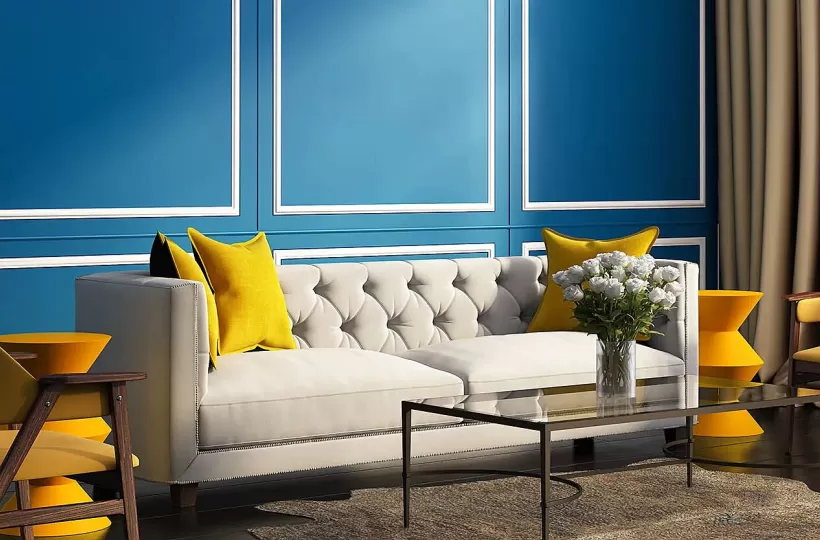
● Turquoise and White - The cleanest, most enduring pairing for turquoise walls. White furniture and white ceiling paint against turquoise walls create a bright, coastal freshness that works in almost any room.
● Turquoise and Terracotta - A combination that works because both colours carry warmth from different directions. Turquoise brings freshness and cool clarity; terracotta brings earthy, sun-baked warmth.
● Turquoise and Gold – Gold colour brings warmth and richness to turquoise walls in a way that elevates both colours. This two colour combination has a jewel-box quality that suits living rooms and bedrooms.
● Turquoise and Grey - A pairing that softens turquoise's intensity without diluting its character. Works well in modern kitchens and living room walls where you want colour without maximalism.
How Nerolac Paint Can Help Your Walls with Turquoise Colour
Nerolac's professional painting service begins with a proper room assessment before any paint goes on. The team evaluates wall dimensions, how natural light enters and changes through the day, and what the room is used for before recommending the right turquoise shade for those specific conditions.
Surface preparation receives particular attention for vivid colours like turquoise. Thorough priming and levelling create the uniform base that deep and bright shades need to perform consistently. Any irregularity in the base layer shows up more clearly under a saturated colour than under a light neutral colours. The application is then handled with a calibrated technique that maintains consistent colour density across the entire wall surface.
Visualise Your Perfect Turquoise Shade with Nerolac Tools
Before you commit to a shade, it helps to see it, compare it, and know how much of it you'll need. Nerolac makes all three steps simple with a set of tools designed specifically for that process.
Colour Visualiser
Not sure how dark Turquoise will look in your living room? Nerolac's Colour Visualiser lets you digitally apply any shade to a space to see it in context. It takes the guesswork out of colour decisions entirely.
Colour Catalogue
You can also browse the full range of Turquoise colour shades organised by tone and finish. The Colour Catalogue makes it easy to compare shades side by side before shortlisting.
Paint Budget Calculator
Once the shade is locked in, the next question is always how much paint to actually buy. Nerolac's Paint Budget Calculator works that out for you and gives you a realistic figure. It's a small step that saves you from both the frustration of running short mid-wall and the waste of buying three extra litres you'll never use.






 संपर्क में रहो
 ऐप डाउनलोड करें
