Indigo has been around far longer than most trend colours. Indigo was one of the most traded dye colours in history, extracted from plants, carried across oceans and used in fabrics worn by royalty and working people alike. That history has given it a certain permanence.
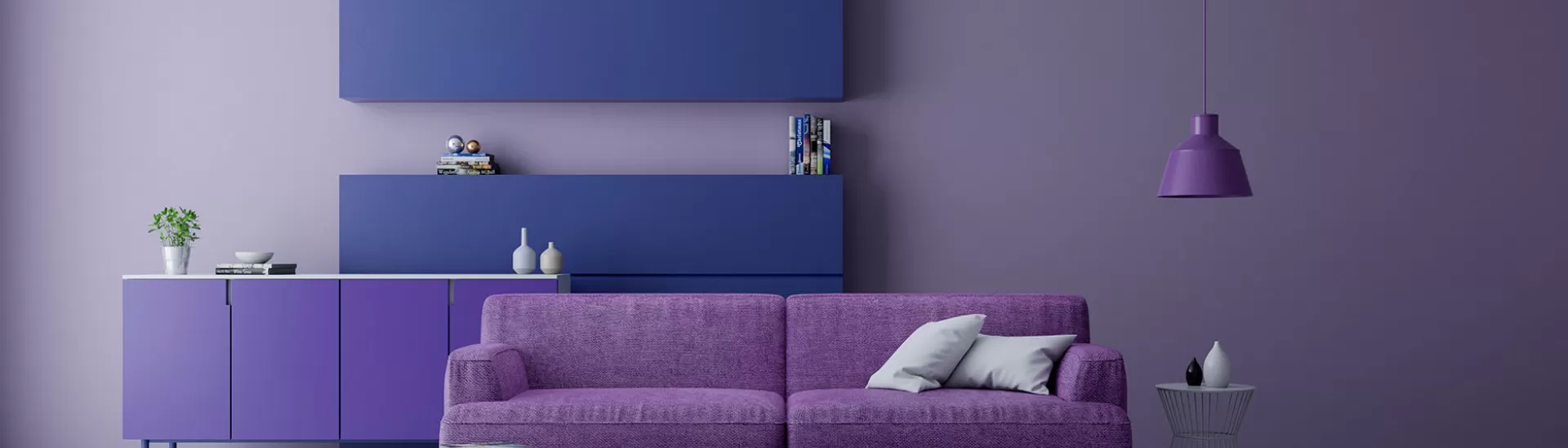
There's a depth to Indigo that other blues don't have - not as stark as navy, not as obvious as royal blue, not as soft as denim. Indigo falls further along the spectrum, closer to violet, carrying the kind of quiet authority that makes a room feel like it was put together by someone who really thought about it.
Indigo Colour Composition
Indigo is a deep, blue-dominant colour between blue and violet colour on the colour spectrum. It is produced by mixing blue and red - blue forms the larger portion, contributing depth and coolness, while red colour shifts it away from pure blue toward the rich, purplish-blue that defines indigo. The balance of the two determines whether the indigo leans cooler and more blue or warmer and more violet.
What Colours Make Indigo?
- Indigo is made from two primary colours - blue and red. Blue carries the dominant character; red shifts it from a pure blue toward the warmer, deeper tone that gives indigo its distinctive quality.
- The classic ratio is approximately two-thirds blue to one-third red - this produces a true, recognisable indigo without tipping too far into purple colour.
- On the colour wheel, indigo's complementary colour falls in the yellow-orange family. A small touch of yellow-orange will mute and neutralise indigo.
How to Make Indigo Colour
Getting the process right when learning how to make indigo colour is about maintaining blue's dominance throughout - the moment red overtakes blue, the mix tips from indigo into violet or purple territory.
- Start with a pure blue base - Ultramarine blue is ideal; it has enough warmth to accept red without the mix going cold or greenish.
- Add red in small increments - Roughly one part red to every two parts blue is the starting point; add the red gradually rather than all at once.
- Check the tone in natural light - Wet indigo often looks different from dried indigo; the purplish-blue quality becomes clearer as the paint dries.
- Adjust from your base - If you want to know how do you make indigo colour that looks darker, add a trace of black at this stage; for a lighter result, begin adding white colour.
- Test on the actual wall surface - Indigo shifts considerably depending on your wall's texture and the lighting in the room; a dried test patch is essential before full application.
Also Read: 8 Stunning Shades of Blue Colour Ideas for Your Walls
What Two Colours Make Indigo Colour?
Different blue and red combinations produce meaningfully different results. Here's how common pairings behave when making indigo colour by mixing two colours:
|
Complementary Pair
|
Tone Produced
|
|
Ultramarine Blue + Crimson Red
|
True, classic indigo - deep and balanced
|
|
Prussian Blue + Cadmium Red
|
Cool, dark indigo - moodier and more serious
|
|
Cerulean Blue + Rose Red
|
Soft, muted indigo - lighter and more delicate
|
|
Navy Blue + Deep Red trace
|
Near-dark indigo approaching midnight blue
|
How to Make Indigo Colour by Mixing Two Colours
When working on how to make indigo colour by mixing two colours for wall paint purposes, ratios control everything.
|
Ratio (Blue: Red)
|
Dominant Colour
|
Result
|
|
80:20
|
Blue dominant
|
True, classic indigo
|
|
75:25
|
Blue dominant
|
Slightly warmer indigo - more violet warmth
|
|
70:30
|
Blue dominant
|
Deeper, richer indigo approaching purple-blue
|
|
65:35
|
Moving toward balance
|
Bold, warm indigo - close to the blue-violet boundary
|
|
60:40
|
Approaching equal
|
Shifts from indigo toward deep violet territory
|
How to Make Light Indigo Colour
Light indigo colour comes from adding white to your blue-red base gradually. The pace matters. Add white in small amounts, mix well, and hold the result up to the wall in natural light before adding more. A well-made light indigo should still clearly look as indigo - cooler and bluer than lavender, more complex and less obvious than pale blue.
Also Read: Bright and Bold Colour Ideas for Your Home
How to Make Dark Indigo Colour
To deepen indigo, add black in very small amounts or increase the blue proportion slightly while keeping red measured. Black is the more aggressive option - it darkens quickly and can strip the warmth from the mix if you overshoot.
- Wishful Indigo - A deep, saturated indigo.
- Green Indigo - A dark indigo with a subtle green undertone.
How to Adjust Indigo Colour Tone
Once you have a base indigo, you can deliberately steer the tone in three directions.
- Warm indigo - Add a trace more red, or a hint of violet. This shifts indigo toward a warmer, more expressive tone that sits closer to blue-violet.
- Cool indigo - Add a trace of grey or a touch more blue. Cool indigo pulls away from its violet side and becomes more precise and restrained.
- Muted indigo - Add a very small amount of yellow-orange to lower the saturation without changing the overall colour. The result is a dusty, complex indigo that reads more quietly on a wall.
Popular Indigo Shades in Nerolac Paints Colour Catalogue
Nerolac's indigo range covers the full spectrum of this colour family thoughtfully.
Indigo Mist
Indigo Mist colour is a soft, hazy indigo that feels atmospheric rather than bold. It has the quality of early morning light filtered through something cool and blue.
Wishful Indigo
Wishful Indigo colour is the shade for rooms where you want indigo to make a clear statement. In a well-lit space, it has a jewel-like richness.
Green Indigo
Green Indigo colour is dark indigo with green undertones that give it an organic, slightly earthy character. For those who find straight indigo too cool, this shade brings welcome complexity.
Ready-Made Indigo Colour Options
Mixing indigo yourself is achievable for art projects and small-scale work. For painting full walls, pre-mixed shades offer clear advantages:
- Ratio accuracy - Indigo is a two-primary mix where even a small shift in the blue-to-red balance changes the character significantly; factory-mixed shades remove this variable entirely.
- Batch consistency - Deep, saturated colours like indigo are the hardest to batch-match in DIY mixing; pre-made paints maintain identical tone across every litre of the project.
- Time and confidence - No test batches, no mid-project corrections, no uncertainty about whether your remixed batch matches the wall you've already painted.
Two strong Nerolac ready-to-use choices for indigo walls:
- Wishful Indigo
- Indigo Mist
Before purchasing, use Nerolac's Colour Visualiser - a tool that lets you digitally see how the colours will look on different walls in actual lighting conditions. For a colour as lighting-sensitive as indigo, this step is genuinely worth the few minutes it takes.
Also Read: 10 Creative Room Paint Design and Colour Ideas
Why Indigo Colour Looks Different on Walls
- Lighting - Indigo is one of the most light-reactive colours you can choose for a wall. Warm light makes indigo look warmer. Cool daylight amplifies the blue, making the same indigo colour shade look crisper.
- Surface texture - Rough or uneven walls create micro-shadows that make indigo appear tonally inconsistent across the surface - noticeably darker in recessed areas and lighter on raised ones.
- Paint finish - Matte indigo absorbs light and produces a velvet-like richness. Gloss finishes reflect light and make the same indigo look brighter and more saturated.
Common Mistakes to Avoid When Mixing Indigo Colour
- Adding too much red at once - Red is a strong modifier - adding extra alters the mix from indigo into violet or purple, and it's genuinely difficult to recover from without adding significant amounts of blue back in.
- Not measuring ratios for large batches - The two-thirds blue to one-third red balance is easy to maintain in small amounts, but difficult to replicate accurately by eye across large quantities.
- Skipping the dried wall test - A proper test patch on the actual wall, fully dried and assessed at different times of day, is non-negotiable before full application.
Mixing Indigo Colour for Wall Paint vs Wall Art
Indigo's two-primary balance makes batch variation more likely than with simpler single-modifier colours, and any inconsistency becomes immediately visible across large wall surfaces. Mix everything in a single session, measure every ratio, and produce more than your estimate. Keep leftover paint sealed for touch-ups.
For wall art and canvas work, indigo is extraordinarily expressive. It creates the particular quality of deep ocean water, evening sky, and atmospheric shadow that no other colour manages with the same naturalness. Artists often layer indigo as a glaze over warmer or cooler undertones to build the kind of complex depth that flat applications can't achieve.
Also Read: Trending Colour Palettes For Colourful Home Interiors
Where to Use Indigo Colour
Indigo works well in most rooms; you need to match shade depth to the room's scale and light levels.
|
Room
|
Best Indigo Shade
|
Placement
|
|
Living Room
|
Wishful Indigo, Green Indigo
|
Feature wall or full room with warm or neutral furnishings
|
|
Bedroom
|
Indigo Mist
|
All walls for atmosphere, or a single accent wall behind the bed
|
|
Kitchen
|
Indigo Mist
|
Single feature wall or upper cabinets only
|
|
Balcony
|
Wishful Indigo
|
Full wall - holds depth well in outdoor light
|
Indigo Wall Colour Combinations for Your Home
- Indigo and Gold - One of the most classically powerful pairings available. Gold colour brings warmth and richness to indigo walls in a way that nothing else quite matches.
- Indigo and White - Clean, bold, and endlessly useful. White ceiling paint against deep indigo walls creates a contrast that makes both colours work harder.
- Indigo and Terracotta - Indigo's cool blue-violet and terracotta colours warm, earthy red-orange are near-complementaries - they push against each other in a way that feels alive and interesting rather than jarring.
- Indigo and Blush Pink - Dusty or muted blush pink colour against deep indigo creates a two colour combinations that feels artistic and layered.
How Nerolac Paint Can Help Your Walls with Indigo Colour
Deep, tonally complex colours like indigo demand more from the painting process than most neutrals. Nerolac's professional painting service begins with a proper room assessment - evaluating natural light levels, wall dimensions, and room function before recommending the right shade.
Surface preparation, including thorough priming and levelling, is carried out before application to prevent streaks and tonal inconsistency that show up far more clearly on deep colours than on lighter ones. Application is handled with a calibrated technique that maintains consistent colour density across the full wall - delivering the rich, uniform result that indigo walls at their best genuinely deserve.
Visualise Your Perfect Indigo Shade with Nerolac Tools
Before you commit to a shade, it helps to see it, compare it, and know how much of it you'll need. Nerolac makes all three steps simple with a set of tools designed specifically for that process.
Colour Visualiser
Not sure how dark indigo will look in your living room? Nerolac's Colour Visualiser lets you digitally apply any shade to a space to see it in context. It takes the guesswork out of colour decisions entirely.
Colour Catalogue
You can also browse the full range of indigo colour shades organised by tone and finish. The Colour Catalogue makes it easy to compare shades side by side before shortlisting.
Paint Budget Calculator
Once the shade is locked in, the next question is always how much paint to actually buy. Nerolac's Paint Budget Calculator works that out for you and gives you a realistic figure. It's a small step that saves you from both the frustration of running short mid-wall and the waste of buying three extra litres you'll never use.







 Get in Touch
 Download App
